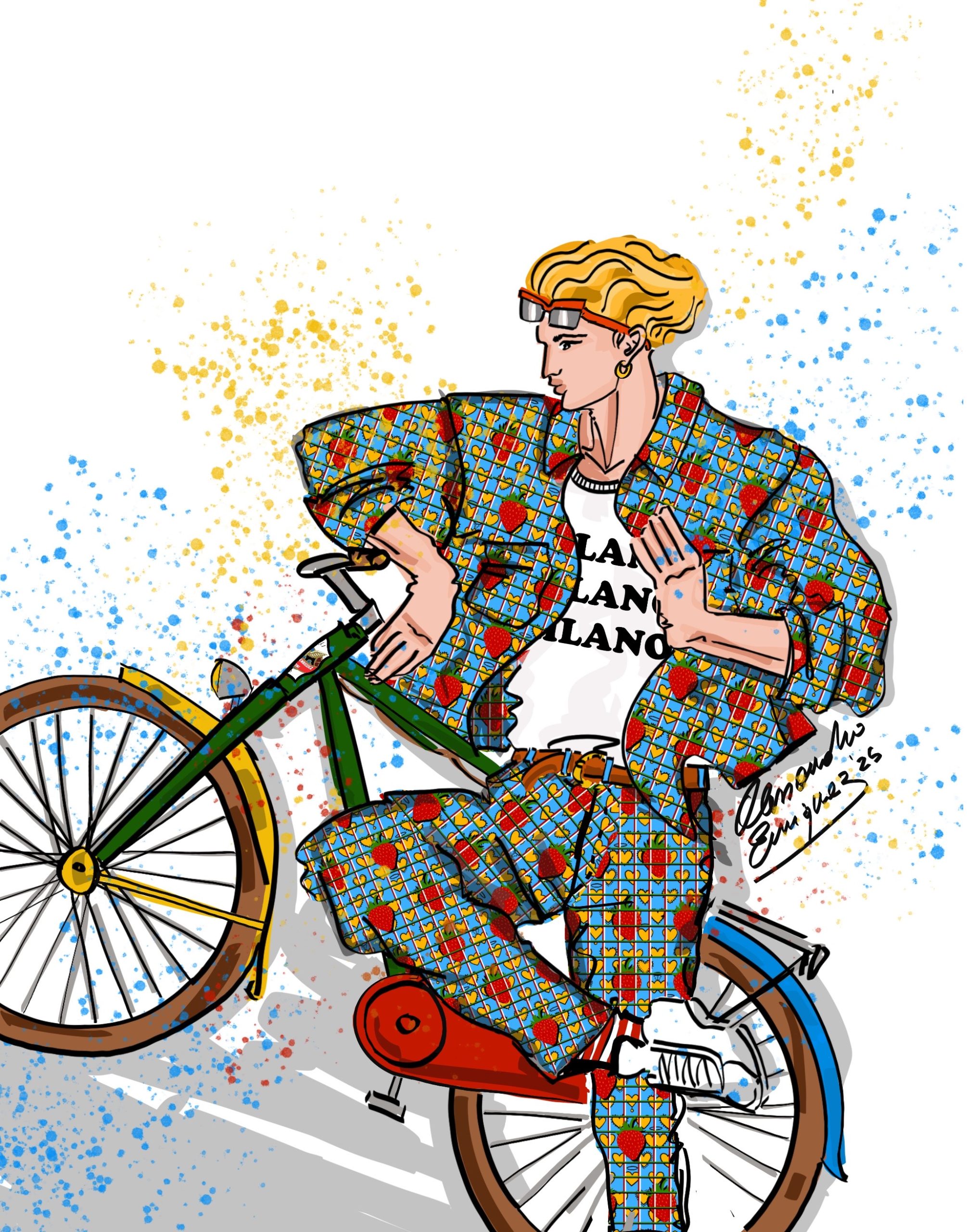
I can Buy myself flowers
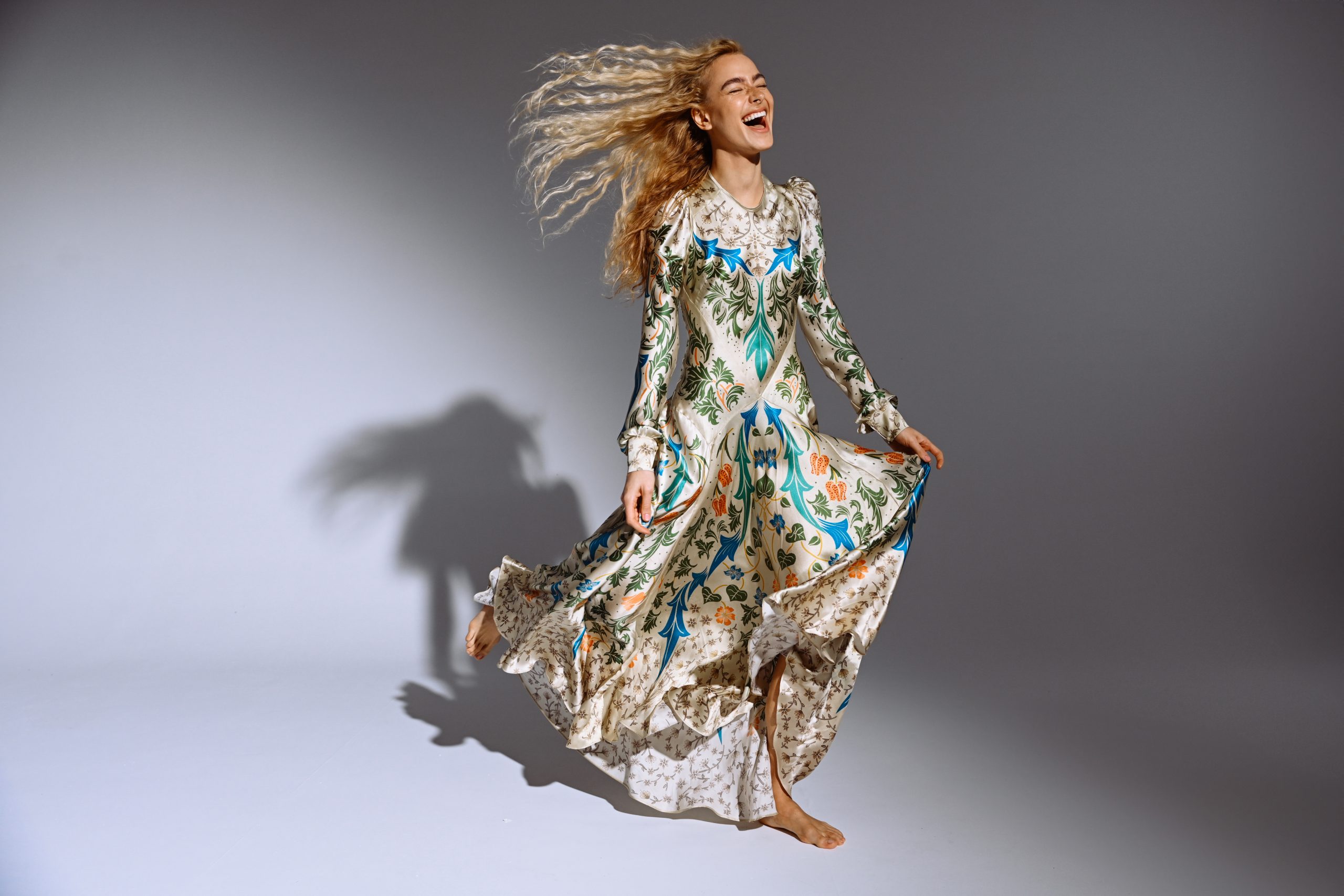
After diving deep into the roots of the ‘Grounding’ trend, it might just be the perfect moment to meet its twin sibling—though not quite identical—The Blooming Renaissance trend.
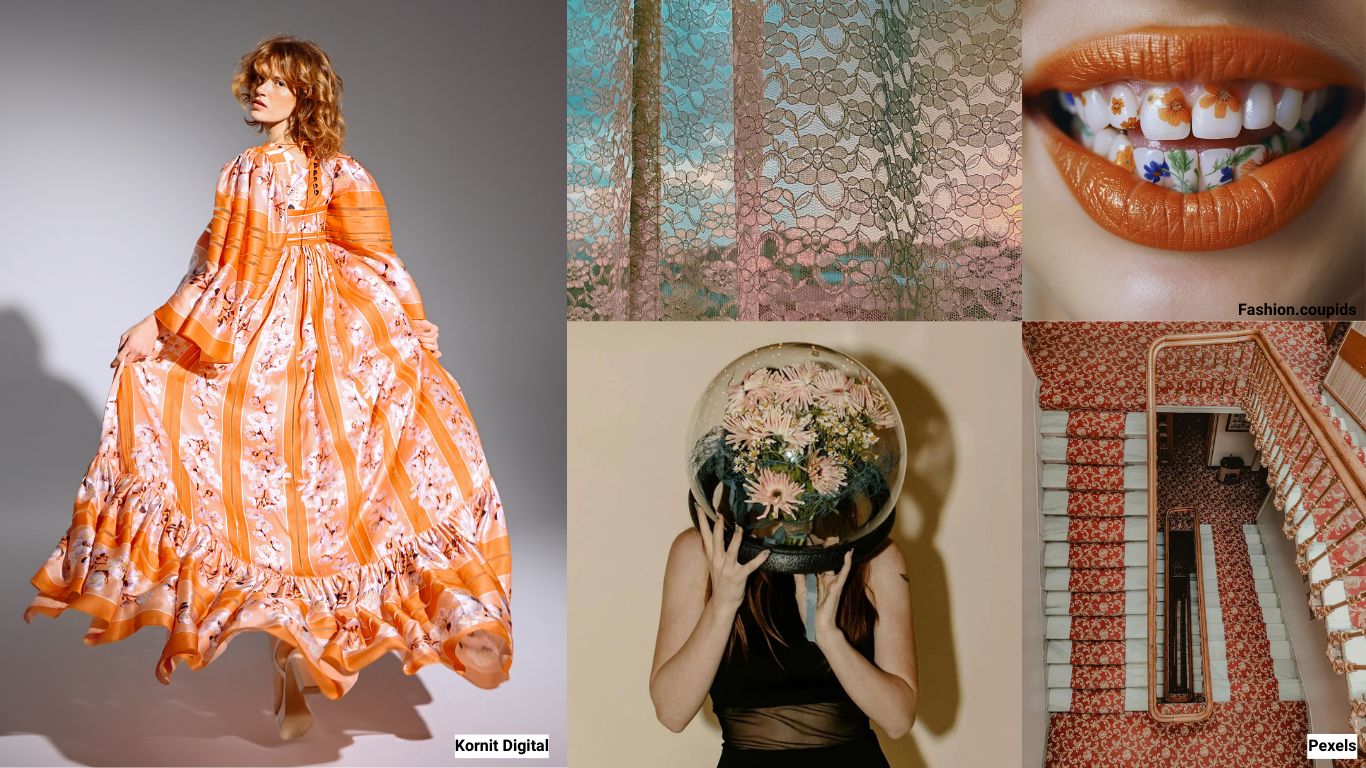
Both trends emerge as a counter-trend to the technological advancements that brought with them a sense of alienation and disconnection, not just from ourselves but from the world around us. Yet, we can confidently say that while the grounding trend seeks to reconnect us with ourselves and the world, the Blooming Renaissance trend symbolizes hope, growth, and renewal, serving as an iconic metaphor for emerging from crises. We’ve mentioned the term ‘polycrisis’ numerous times here, but that doesn’t mean it’s here to stay forever. On the contrary, we’re in the midst of an essential evolutionary process to move beyond it. Perhaps it’s not the olive branch-bearing dove we grew up waiting for, but for now, we might have to settle for flourishing prints with layers of transparency, mesmerizing floral wallpapers, and buildings adorned with blooming motifs that inspire us to shed the dust of poly-crisis and embrace a new layer of blossoming pollen.
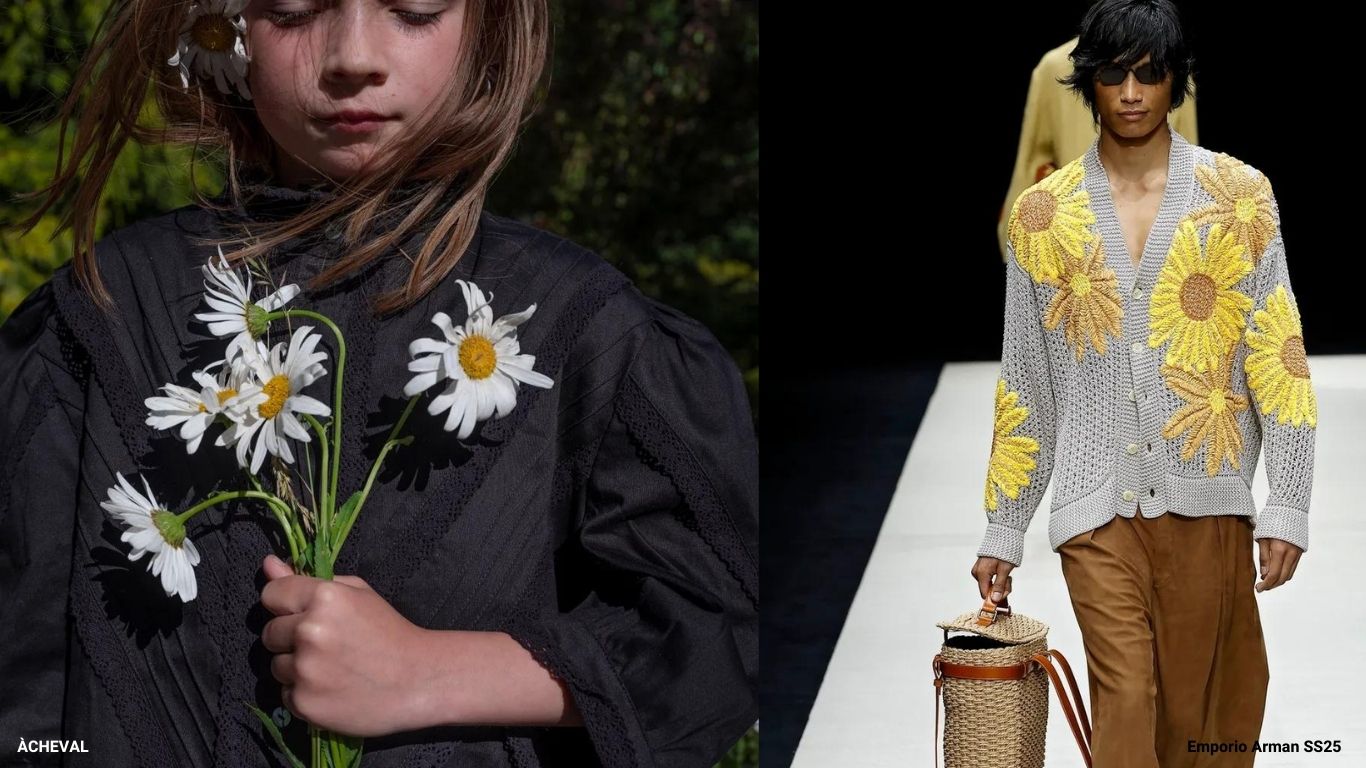
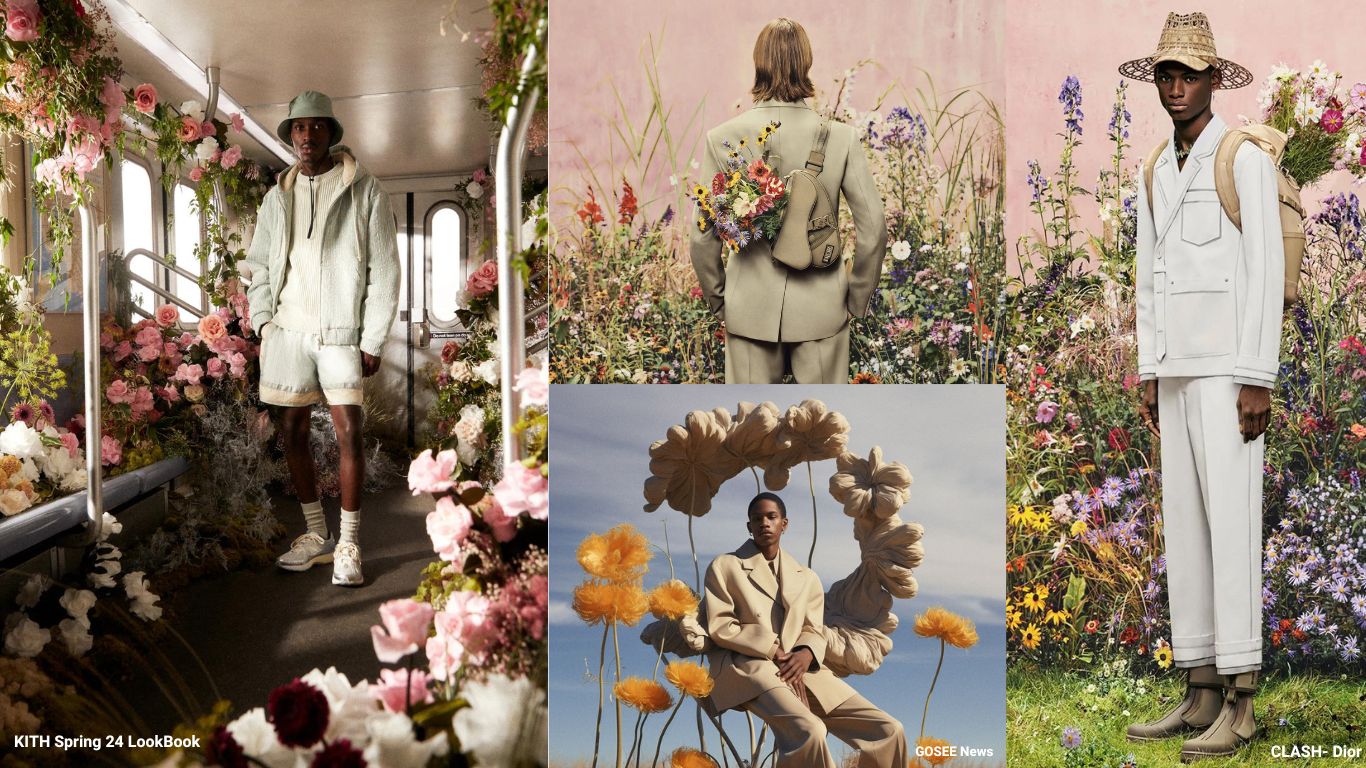
Let’s start with the fact that blooming and renewal inherently spark optimism, something we all desperately need in the current moment, especially after the challenging times we’ve been through. This is precisely why we’re beginning to see a prominent presence of floral imagery in all its vibrant hues.
Floral motifs, in all their forms, are firmly positioned as a mega trend. They evolve over time, reflecting the relevant zeitgeist of the time. They make an appearance every year, but always within a different context—sometimes they symbolize tranquility, and at other times, embodying a specific color palette. One thing is certain: these motifs undergo constant evolution and transformation, and in their current round, they herald the dawn of a new era, solidifying their status as a symbol of hope.
The clearest sign that flowers symbolize the dawn of a new era is the focus on this theme at the annual Met Gala event. This year, the event was themed ‘Garden of Time,’ showcasing an extraordinary display of florals on the red carpet—a refreshing breath of air arriving at the perfect moment of need.
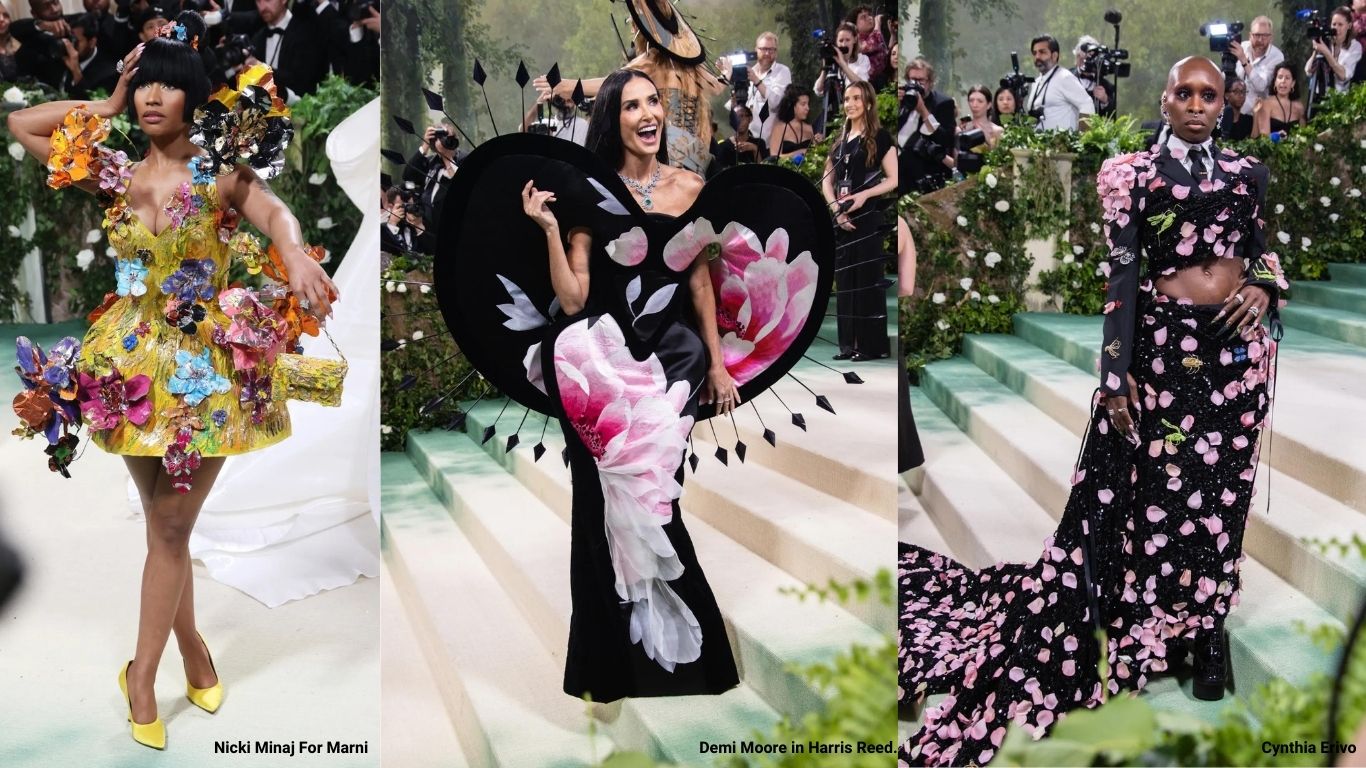
Behind this year’s theme lies a multitude of interpretations, such as the interplay between nature and fashion, which naturally includes the theme of sustainability. There’s also a nod to the cyclical nature of fashion and the evolutionary development of trends. The theme itself has been interpreted in various ways by the designers who dressed the stars, and even today, these interpretations remain somewhat complex to articulate in words.
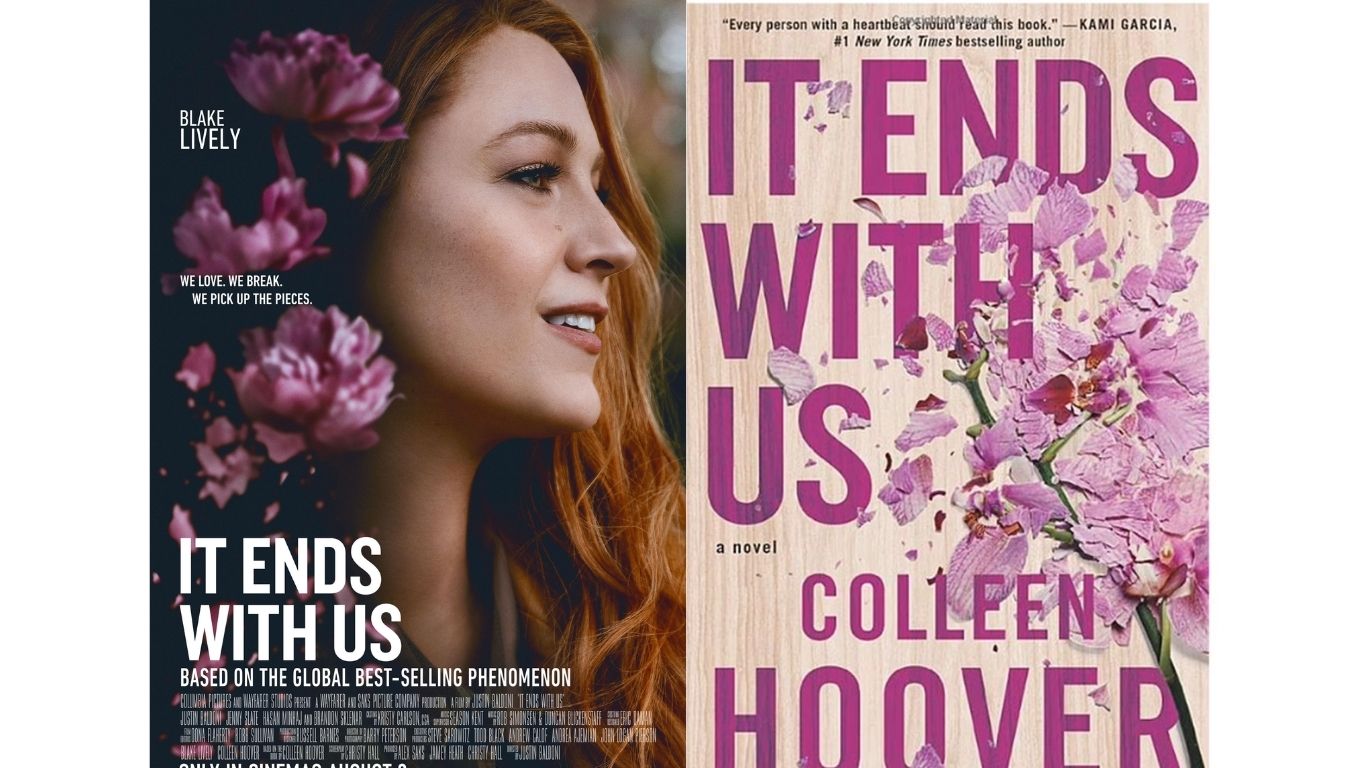
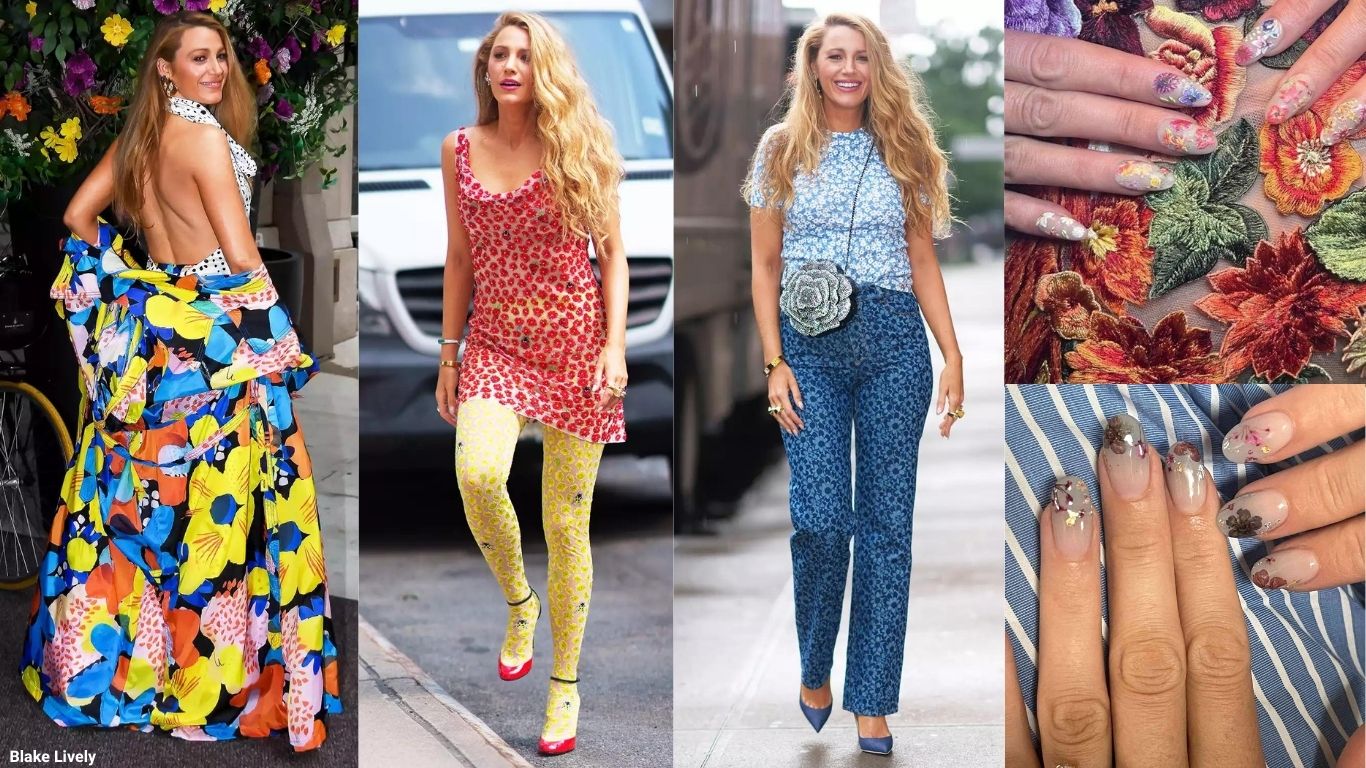
Following the stunning fashion displays at the Met Gala, we were directly exposed to the floral element on the runways during the recent Fashion Weeks. However, the most striking display came from Blake Lively as part of the promotion for her new movie, It Ends With Us, which was released this August. The film’s main character owns a flower shop, and in line with this narrative, Lively decided to center all the PR and promotion around her new film by adorning herself with prominent floral elements—whether in 3D or as prints, they were impossible to miss.
The connection between flowers and the art world is deeply rooted in history. It’s impossible to discuss flowers without recalling Van Gogh’s sunflowers, Monet’s impressionist water lilies, or the rich botanical worlds behind Frida Kahlo’s paintings, intended to promote and preserve her Mexican heritage. Flowers often carry iconic cultural meanings: in Hinduism, jasmine flowers symbolize love and fertility, while in Buddhism, the lotus represents birth and rebirth, as it opens with the sunrise and closes at sunset. In Christianity, the white lily symbolizes purity and virginity, in stark contrast to the eroticism and fertility it symbolized in ancient Greece and Rome. It’s no wonder that these breathtaking works of art are displayed in the world’s leading museums, and the connection between these hopeful images and groundbreaking artistic expressions continues to thrive today.
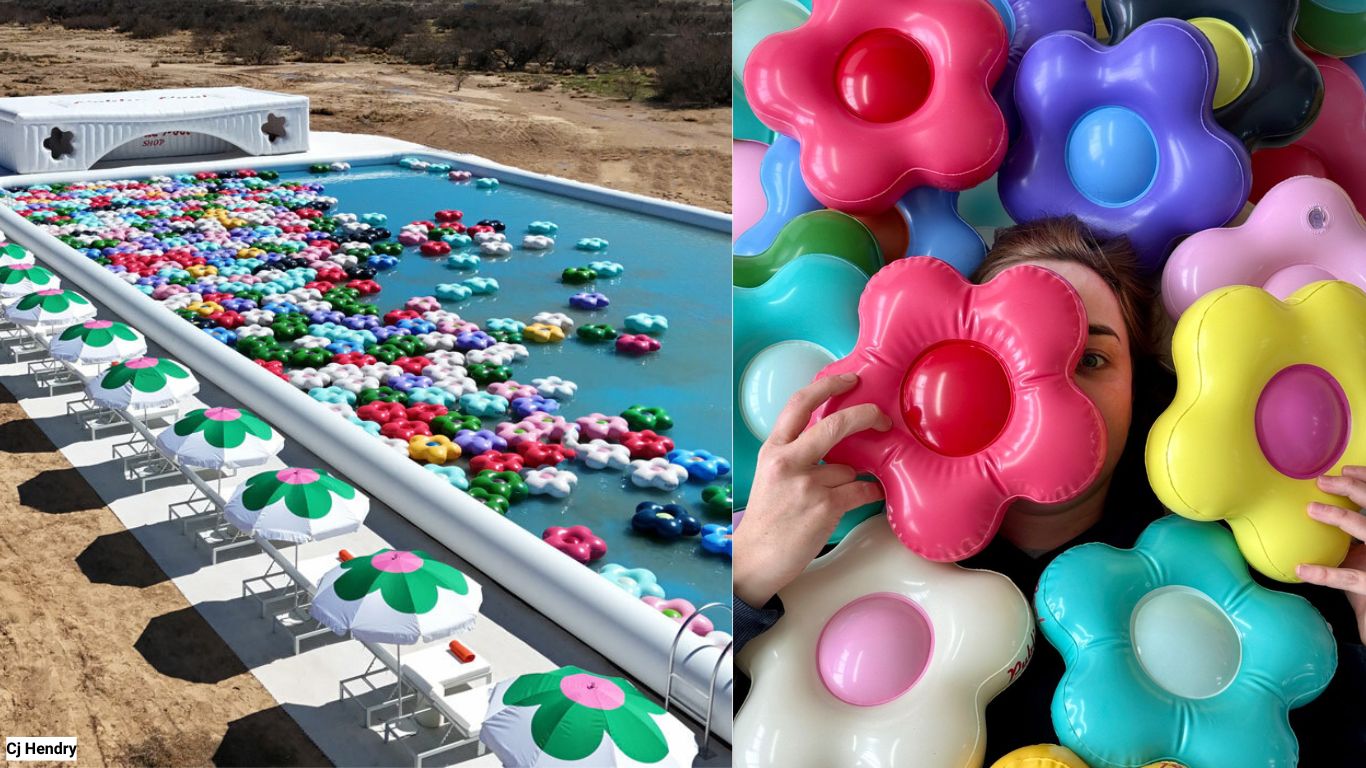
A prime example of this can be seen in the works of American artist Cj Hendry, who created a massive pool filled with inflatable flowers in the middle of the Las Vegas desert. According to her, she wanted to capture and present the kitsch and grotesqueness that Las Vegas represents through these images, set against the backdrop of nowhere and the surrounding desert. Although this installation was relatively short-lived, it certainly made waves and generated widespread media attention. Since the exhibit was located in the middle of a desert farm, Hendry ensured that the pool water was recycled for agricultural use, and the pool itself will be repurposed into material for furniture production.
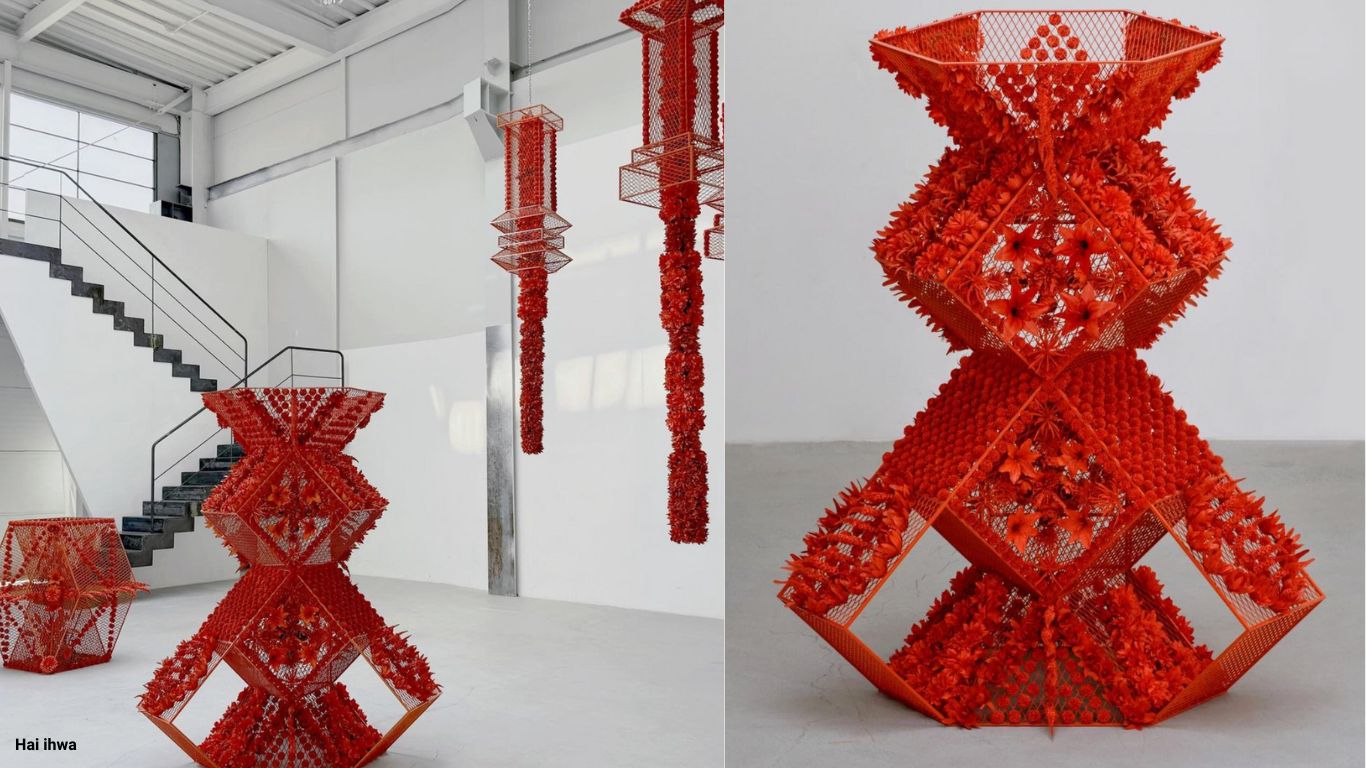
Another fascinating installation can be found in South Korea, inspired by the traditional Dancheong pattern, which often incorporates numerous floral motifs. In this particular exhibit, the artist aimed to highlight the delicate intersections between tradition and modernism through a unique construction that embodies Korean elegance, integrating the color red, which symbolizes passion.
And speaking of Korea, another equally fascinating topic is grooming, particularly among men. Research has shown that South Korean men spend more on skincare products than men anywhere else in the world, accounting for 21% of global skincare sales. This is largely due to the widespread belief among South Korean men that flawless skin is a crucial factor in career advancement and relationships. Alongside the rise of K-pop culture, the concept of ‘Flower Boys’ emerged—young, well-groomed, and beautiful men who represent a soft and fragile masculinity, in stark contrast to the macho image we’ve been accustomed to seeing. Around this image, we can observe a proliferation of floral motifs, migrating from the fringes of culture to the very heart of the mainstream.
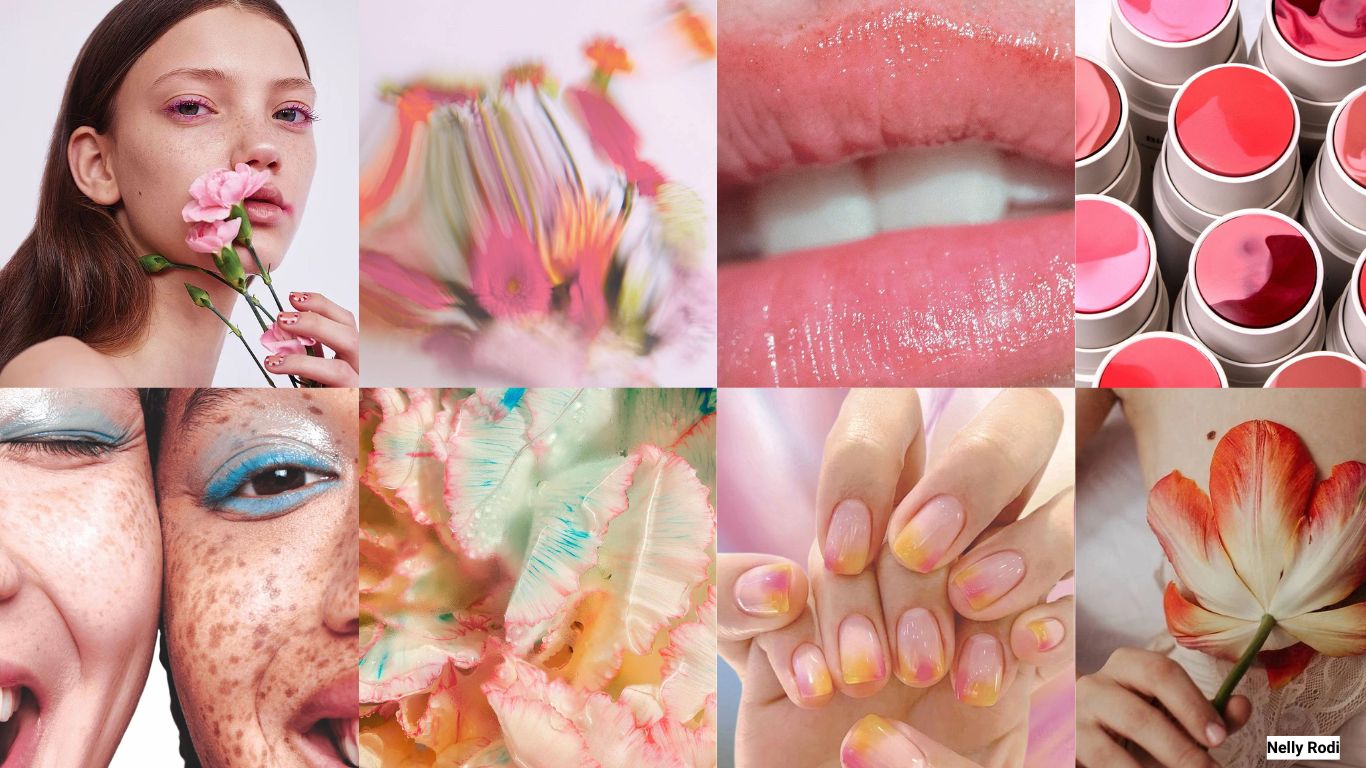
In the beauty world, we’re seeing a growing focus on the vibrant colors of flowers, specifically the gradient effect of petals, which begins with intense, saturated hues that gradually fade and soften toward the stem. This motif creates dreamy visuals meant to evoke a sense of floating on water, enhanced by a jelly-like transparency that imparts a fresh and invigorating feel.
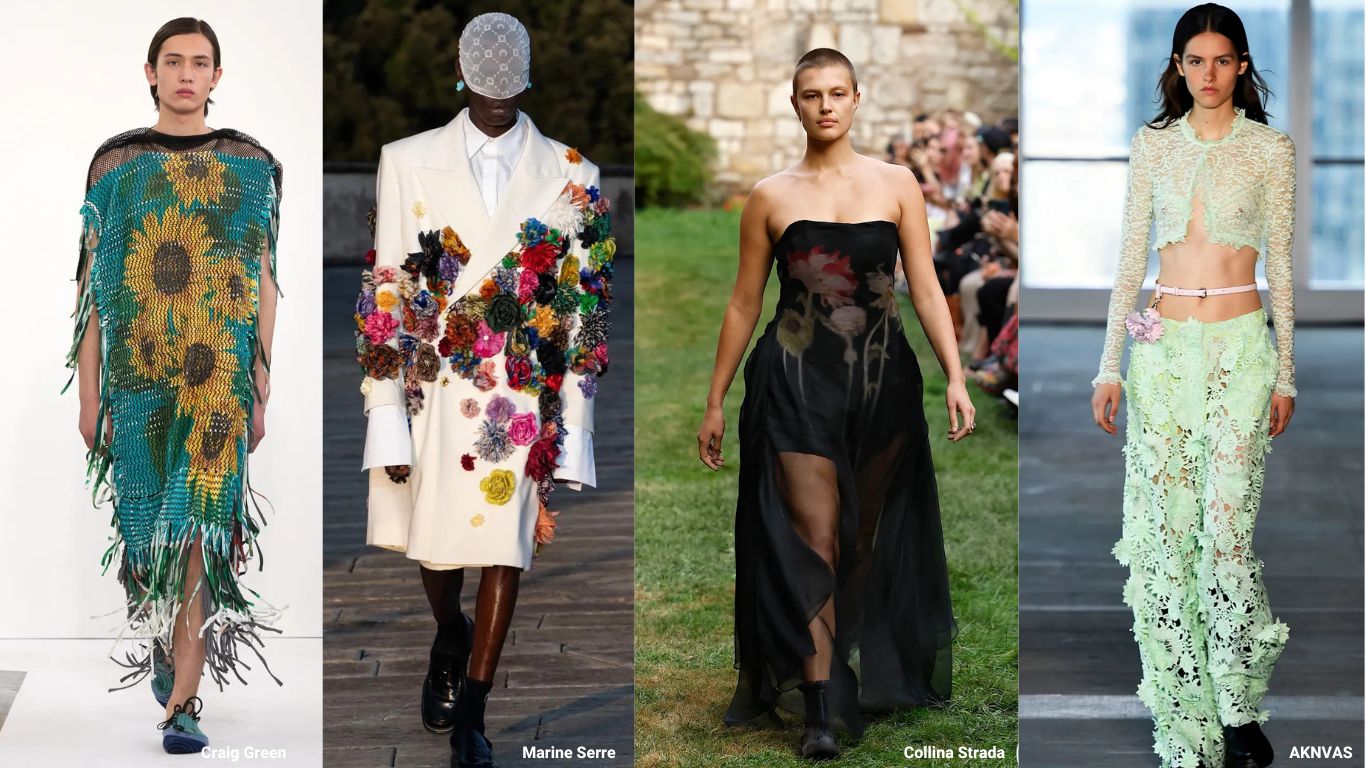
Apart from appearances on the red carpets and at the Met Gala, the floral elements were, of course, abundant on the runway, which practically guarantees that this trend will quickly seep into the mainstream and become part of the collective style.
In the world of product design, a fascinating display can be seen in the work of Belgian artist Arthur Vandergucht, who created aluminum benches adorned with aluminum flowers. Vandergucht, a well-known sculptor, crafted these solid benches and embellished them with flowers to give them a more refined aesthetic. Vandergucht skillfully balances an industrial look with the delicate nature of flowers, using their naive color palette. This interpretation can be seen as a response to the increasing industrialization of our world, and the subtle pushback we all long for—a return to our roots, symbolized by flowers.
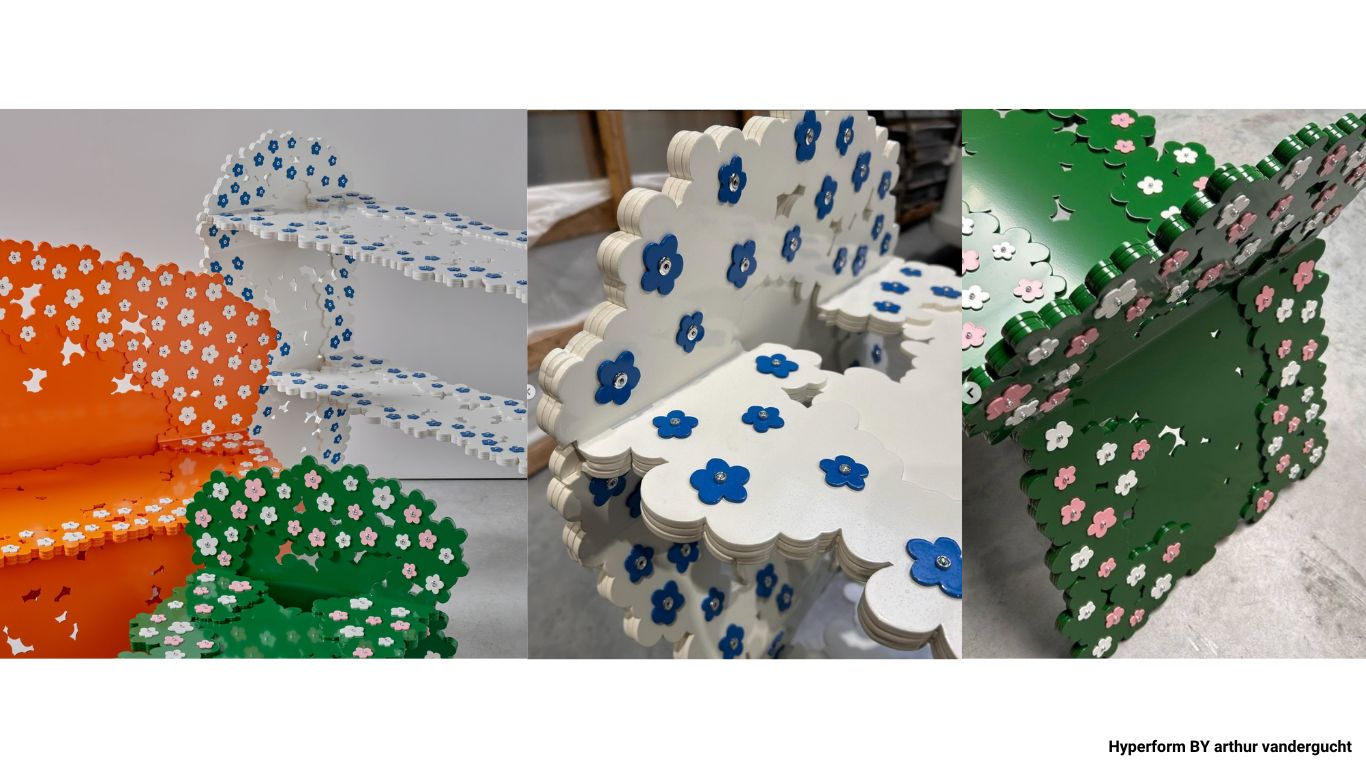
Hyperform BY arthur vandergucht
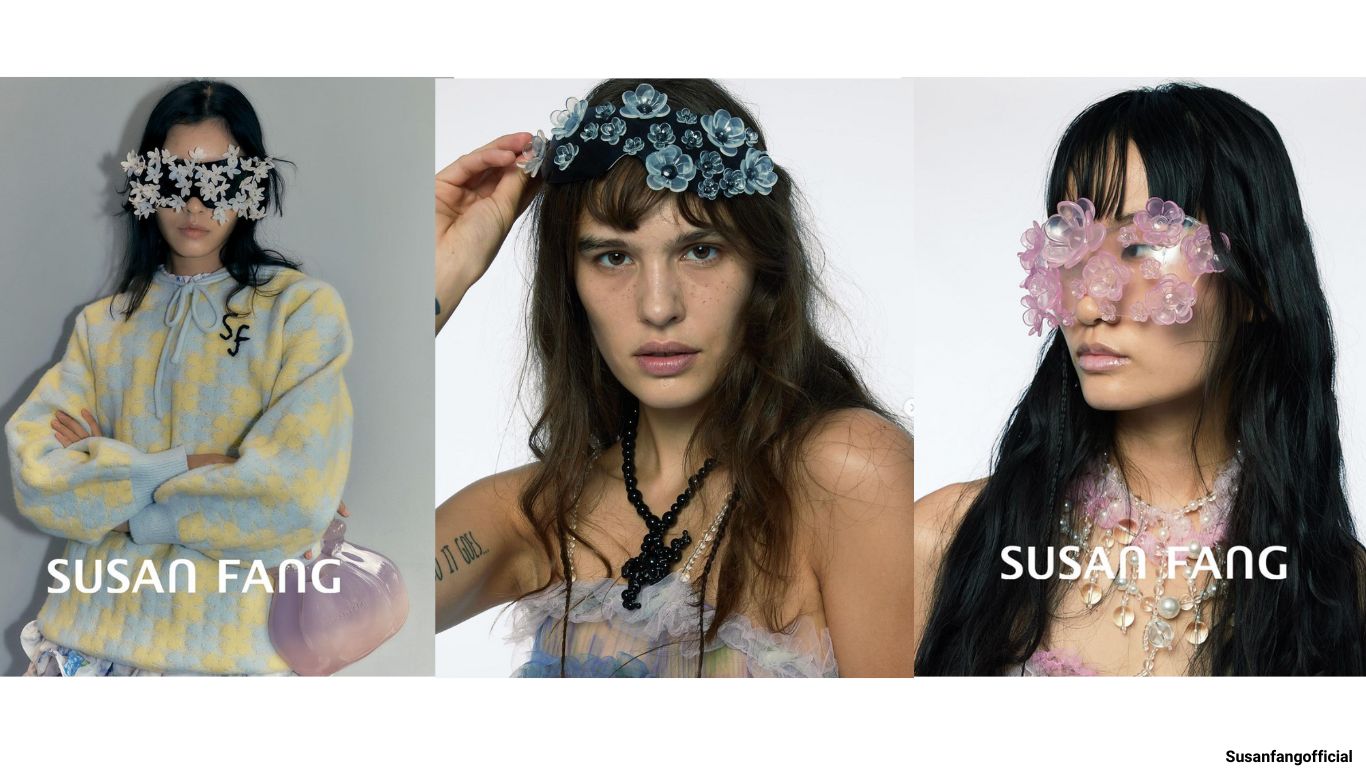
Another equally fascinating interpretation can be seen in the fashion accessories designed by Susan Fang, a young designer who launched her brand in 2017 and focuses on different perceptions of human beauty, nature, sustainability, and the fractals that surround us. In her latest accessory collection for Spring/Summer 2024, she primarily focused on 3D-printed floral elements on accessories that complement her collection, offering a captivating glimpse into a dreamy and optimistic world.
We’re unmistakably witnessing a floral renaissance spreading its tendrils into realms we’ve never seen before. While flowers have always held a significant presence in fashion and wellness, there’s a sense now that their status is stronger than ever, evolving into a mega-trend that’s here to stay for years to come, especially as the world dedicates itself to recovery and emerging from crisis. Many trends out there demand some level of adaptation, the adoption of new habits, or change. But this trend merely asks for surrender and an optimistic outlook—challenging as that may be. This trend seamlessly intertwines with the sustainability movement, completing a full circle, because we can’t talk about rebirth, healing, and recovery without acknowledging sustainability, which has firmly established itself as a key player in today’s evolutionary processes. So, perhaps the ideal solution is to view everything through the lens of sustainability and watch the healing unfold.