Print, Express, Repeat: The T-Shirt’s Untold Journey
From military basics to cultural icons, the printed T-shirt has long been a canvas for identity and protest. Now, thanks to Kornit's pioneering digital printing technology, this everyday garment is reborn as a more sustainable, on-demand platform for instant self-expression, turning each shirt into a unique, wearable story that captures the pulse of our times.
There is one simple garment that still manages to unite generations, transcend borders, and speak louder than almost any other item in our wardrobes: the T-shirt. It has evolved from its humble beginnings as an undergarment to become a powerful vehicle for self-expression, protest, and art. Whether worn by celebrities on the red carpet, activists on the front lines, or everyday people in cities around the world, the T-shirt remains a universal canvas, one that reflects the spirit, struggles, and stories of our times.

Credit: dpa/Alamy Live News
Take, for example, the most talked-about T-shirt of the season. Dior’s Fall/Winter collection brings back a true fashion legend: the iconic “J’Adore Dior” T-shirt, first made famous in the early 2000s by John Galliano and worn by stars like Sarah Jessica Parker and Lucy Liu in Sex and the City. Recent designs such as the “Protect the Dolls” T-shirt have sparked headlines and global conversations, proving that this garment still wields real power as a billboard for activism and a catalyst for public discourse. Today, digital innovations from Kornit have revolutionized T-shirt printing, enabling the creation of personalized, more sustainable designs that keep this everyday item at the center of cultural and political discourse.

Credit: Wiktor Szymanowicz/Alamy
Toward Greener Fashion and On-Demand Production
The digital revolution has transformed the T-shirt from a simple garment into a global storytelling platform. While many T-shirts are still produced using traditional analog methods, such as screen printing, which can limit design complexity and flexibility, Kornit’s advanced digital printing technology is changing what’s possible. It enables vibrant, detailed prints with greater speed and customization, offering benefits such as reduced waste and more efficient resource utilization compared to conventional techniques.
What sets Kornit’s approach apart is its true on-demand capability. Unlike traditional processes that require large minimum orders and result in excess inventory, Kornit’s technology enables printing each shirt only after an order is placed, eliminating minimums and wasted stock. This means brands and independent creators can respond instantly to trends, print small batches, or even produce one-of-a-kind pieces, all while maintaining high quality and consistency.
The ability to print exactly what’s needed, when it’s needed, ensures that the T-shirt remains a dynamic and accessible art form, as well as a powerful medium for personal and collective expression in the digital age.
From Underwear to Uprising
The T-shirt’s journey begins far from the realm of statement fashion. Originally designed as an undergarment for US Navy sailors in the late 19th century, the simple cotton jersey was a utilitarian piece, a breathable, comfortable, and easily replaceable one. Little did anyone know that this humble garment would become a global canvas of personal and political expression.
The fundamental transformation began in the mid-20th century. World War II veterans, accustomed to their comfortable military undershirts, continued wearing them as casual wear. By the 1950s, Hollywood rebels like Marlon Brando in “A Streetcar Named Desire” and James Dean in “Rebel Without a Cause” elevated the T-shirt from a garment of underwear to a symbol of youthful defiance.
The Political Canvas
The 1960s and 1970s saw the T-shirt emerge as a powerful medium of communication. Political movements, counterculture, and social activism found a perfect platform in this simple garment. The iconic Che Guevara image, designed by Jim Fitzpatrick, transformed the T-shirt into a global symbol of revolutionary spirit. Anti-war protests, civil rights movements, and cultural revolutions were quite literally worn on sleeves.
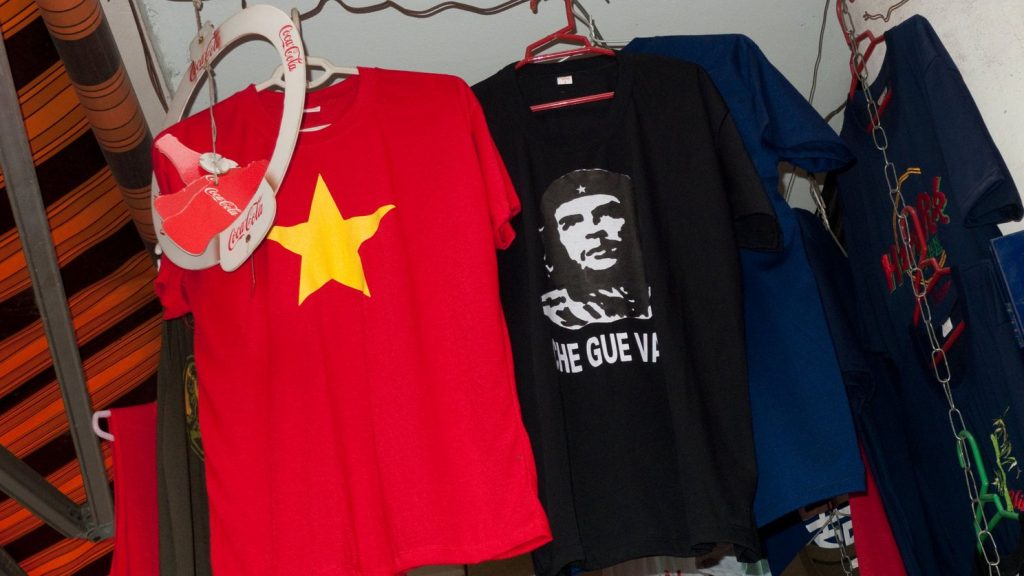
Che Guevara T-Shirt on sale amongst other T-Shirts.
Bands quickly recognized the T-shirt’s potential. The Rolling Stones’ lips and tongue logo, designed by John Pasche in 1970, became more than merchandise. It was a cultural icon. Punk bands like the Ramones used their T-shirts to express their rebellious identity, turning fashion into a musical manifesto.
Milton Glaser’s legendary “I ♥ NY” design, sketched in the back of a taxi as a pro-bono project to boost New York City’s spirits, became the blueprint for this new visual language. What began as a tourism campaign had become a universal symbol of urban resilience, proving that a simple graphic could transcend its original purpose.
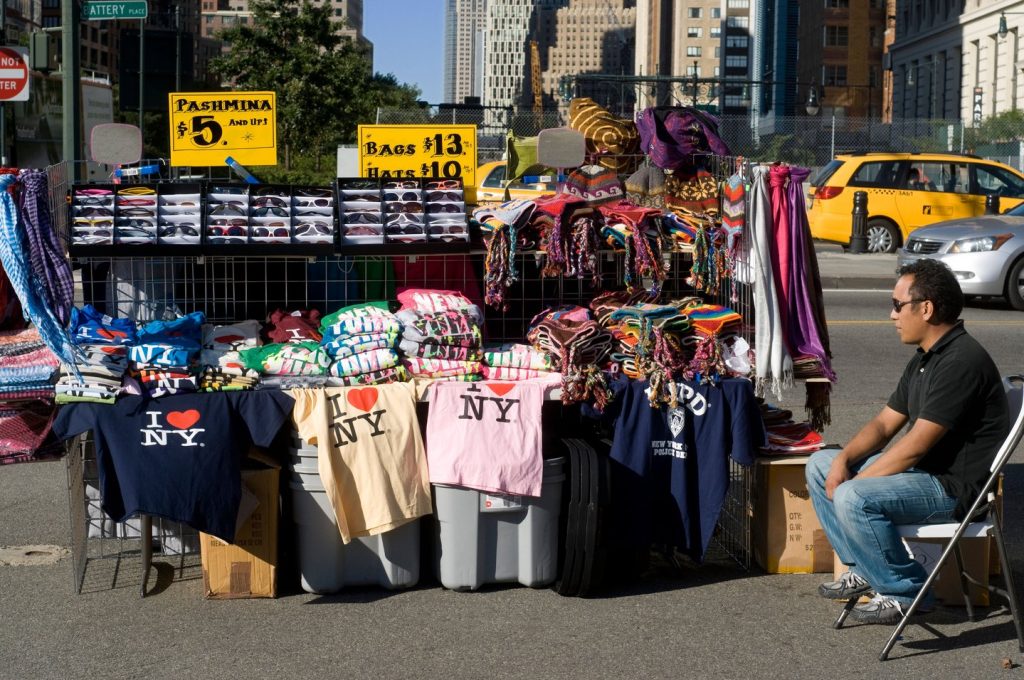
“I Love New York” Shirts, Souvenir Stand, NYC. Battery Park City.
Artistic Intervention
By the 1980s, artists began treating the T-shirt as a legitimate medium. Keith Haring’s bold graphic designs turned clothing into a mobile art gallery. His HIV awareness and social justice-themed shirts weren’t just fashion; they were statements that could be worn, shared, and celebrated.
Fashion designers soon followed. Jean-Paul Gaultier’s provocative printed T-shirts blurred the lines between high fashion and street style. Vivienne Westwood’s punk-inspired designs continued to challenge traditional fashion boundaries, proving that a T-shirt could be both a political statement and a haute couture piece.
At the same time, Nirvana’s torn and tortured logo became a generational anthem that spoke of more than just music. It was a visual scream of cultural disillusionment. Streetwear brands like Supreme turned limited drops into cultural events, their logos becoming modern hieroglyphs of urban cool.

Woman Wearing Obama Hope T-shirt in Oaxaca – Mexico.
The Contemporary Canvas: Kornit and the Future
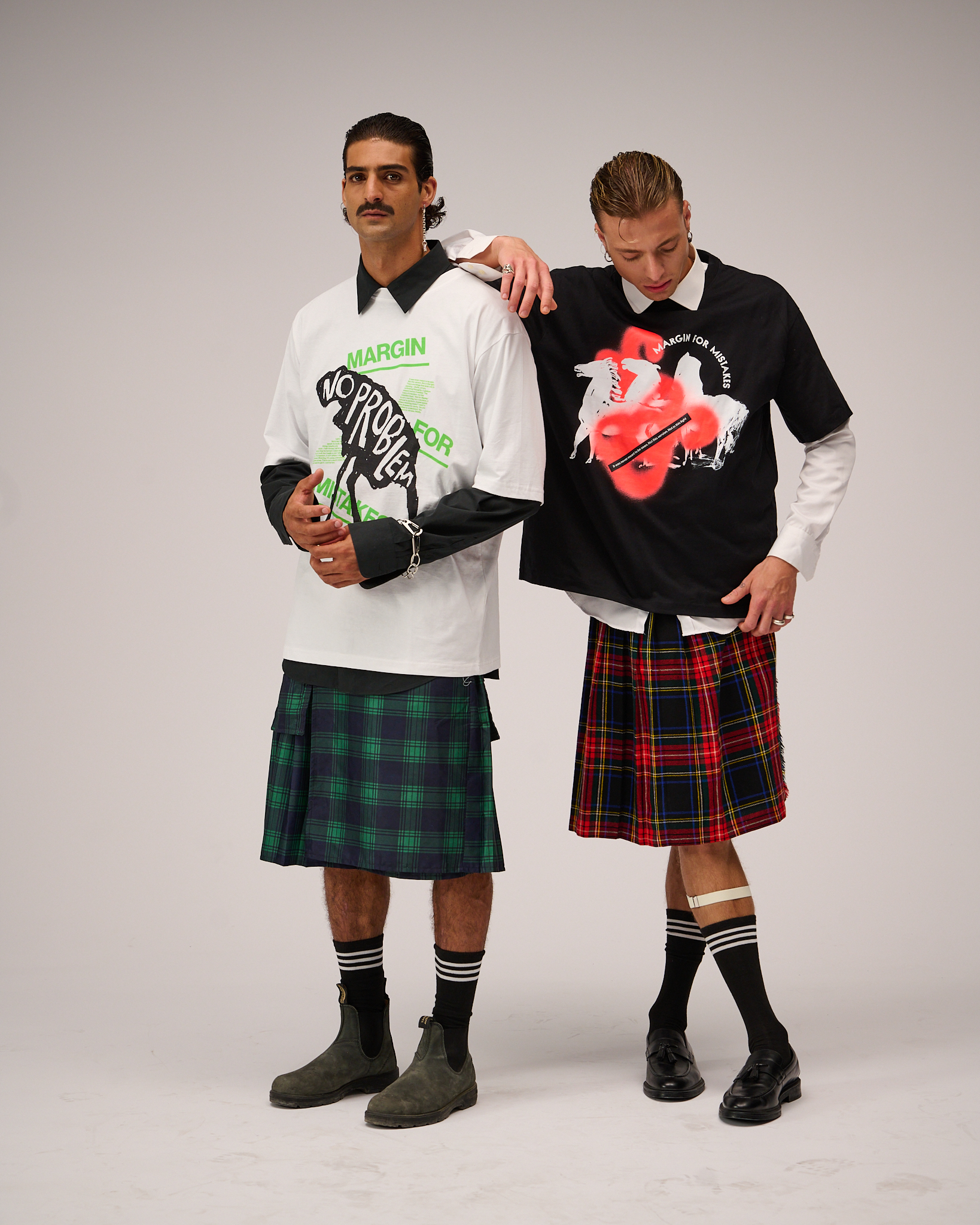
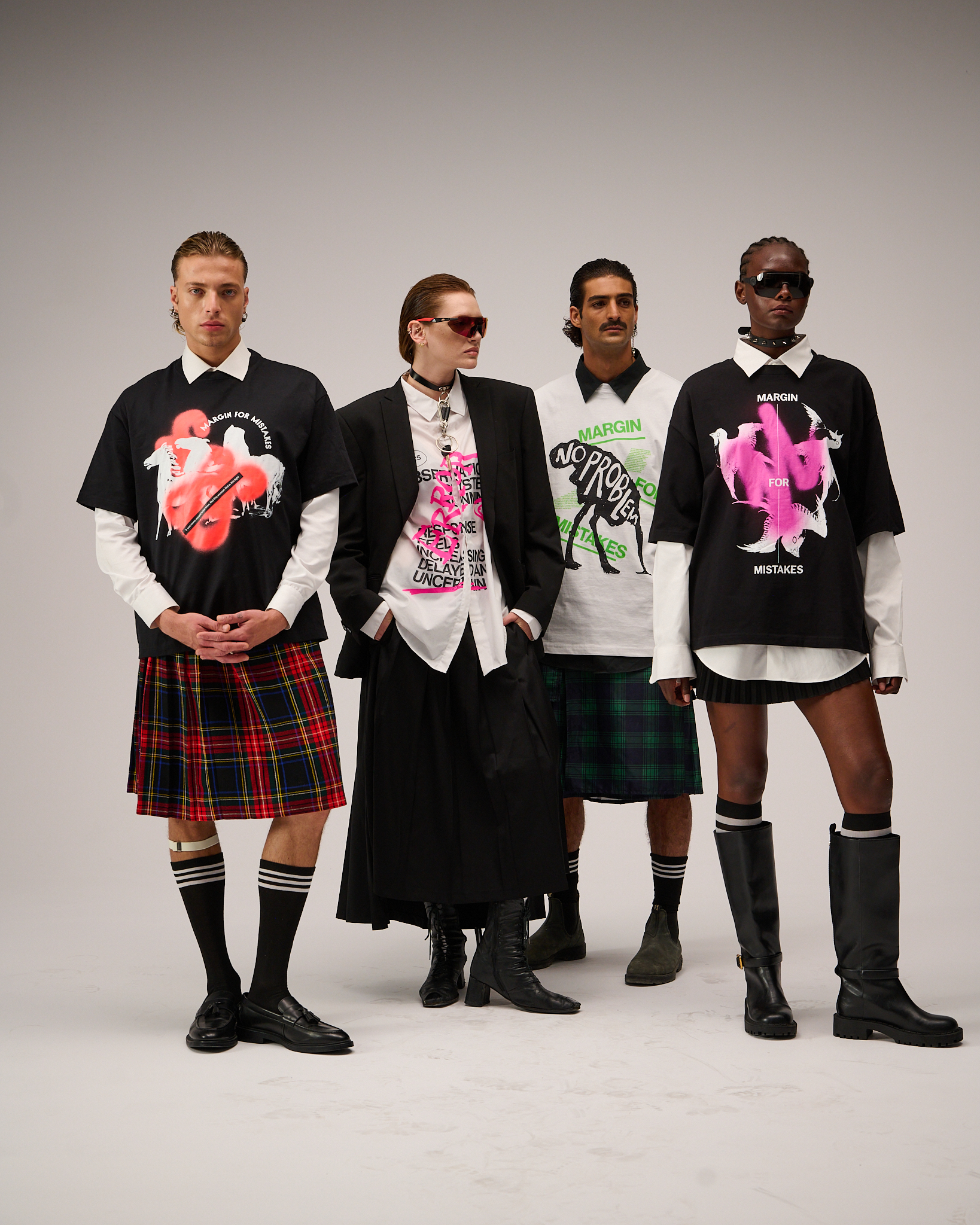
Today, the printed T-shirt continues to evolve. Sustainable fashion brands are using eco-friendly inks and organic cotton. Digital technologies allow for hyper-personalized, on-demand printing. Kornit has been at the forefront of this transformation, pioneering advanced digital printing solutions that enable the production of vibrant, detailed designs with minimal environmental impact. Kornit’s technology enables brands and independent creators to print small batches or even single shirts on demand, reducing waste and allowing for true creative freedom. This shift has elevated the T-shirt beyond mere clothing to a dynamic and accessible art form. One that can respond instantly to cultural moments and personal expression. Kornit printed T-shirts. Image by Meir Cohen