DTFilm vs Screen Printing: Which Method Works for You

The focus on sustainability and personalization is changing the printing industry. Companies that use industrial printers for their operations must consider how such changes may affect their production workflow.
Two of the most widely discussed techniques are Screen Printing and Direct-to-Film (DTF or DTFilm). While screen printing is a legacy technique known for its reliability in high-volume production, DTF is rising as a flexible and cost-effective alternative. The former is taking its rightful place in sectors that require short runs, complex designs, and varied applications.
Key Takeaways
- DTFilm excels at fine detail, color gradients, and semi-transparent elements.
- Screen printing remains dominant in high-volume, repetitive jobs with fewer colors.
- Kornit MAX DTFilm enables fast, durable, and sustainable DTF production.
- Screen printing has higher setup costs but lower per-unit costs at scale while DTF offers faster turnaround and more flexibility across fabrics.
- Choosing the right method depends on design complexity, order size, and material variety.
What Is Screen Printing?
Screen printing, also known as silkscreen printing, is a traditional technique where ink is pushed through a mesh stencil (or screen) onto a fabric. Each color in the design requires its own screen, which makes the setup time-consuming and costly for complex or low-volume jobs.
Pros:
- Highly cost-effective for large print runs
- Vibrant and durable prints on cotton and blends
- Excellent color opacity
Cons:
- Long setup time and higher upfront costs
- Poor for complex or multicolor designs
- Limited fabric and design flexibility
What Is DTFilm Printing?
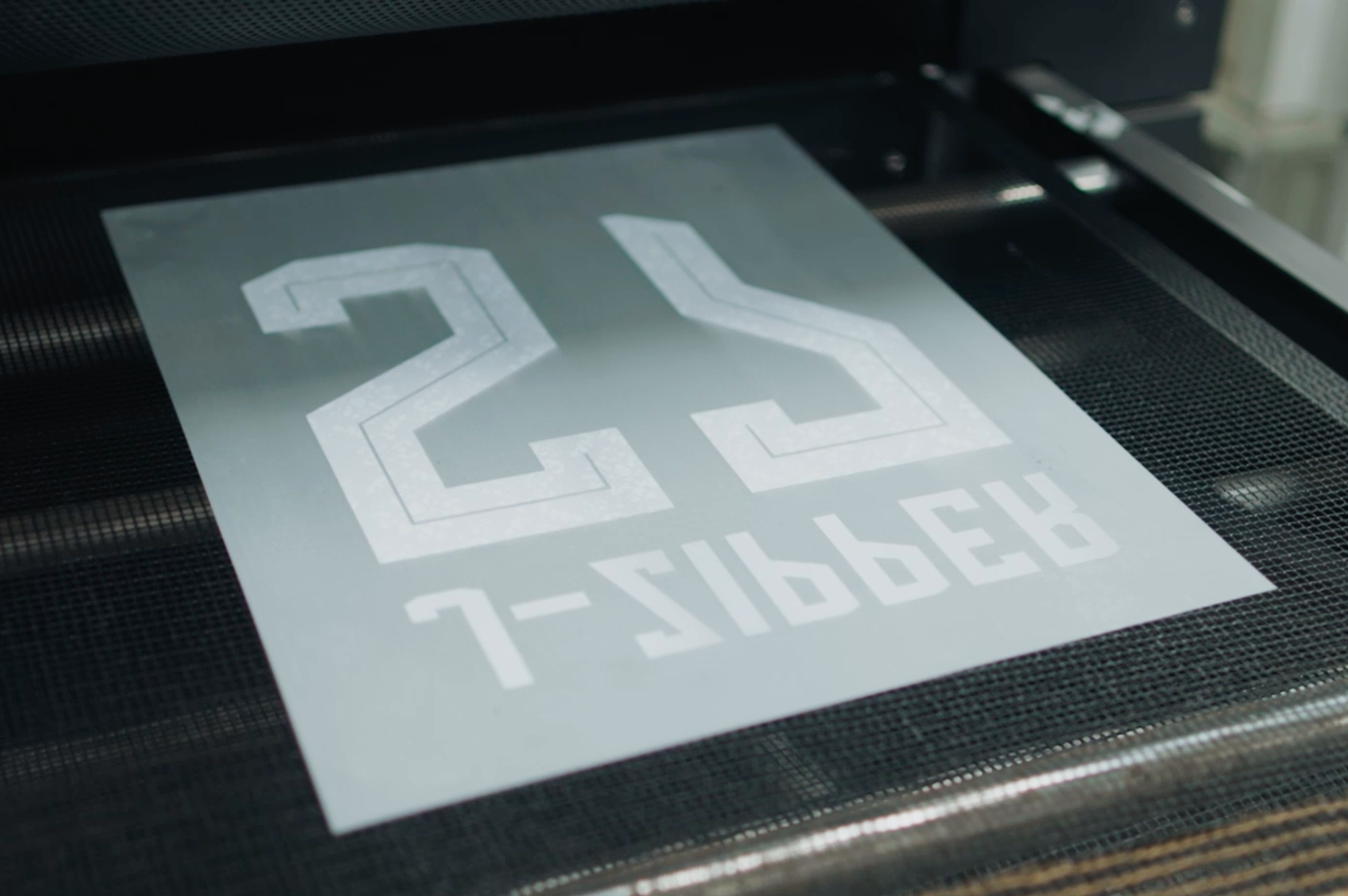
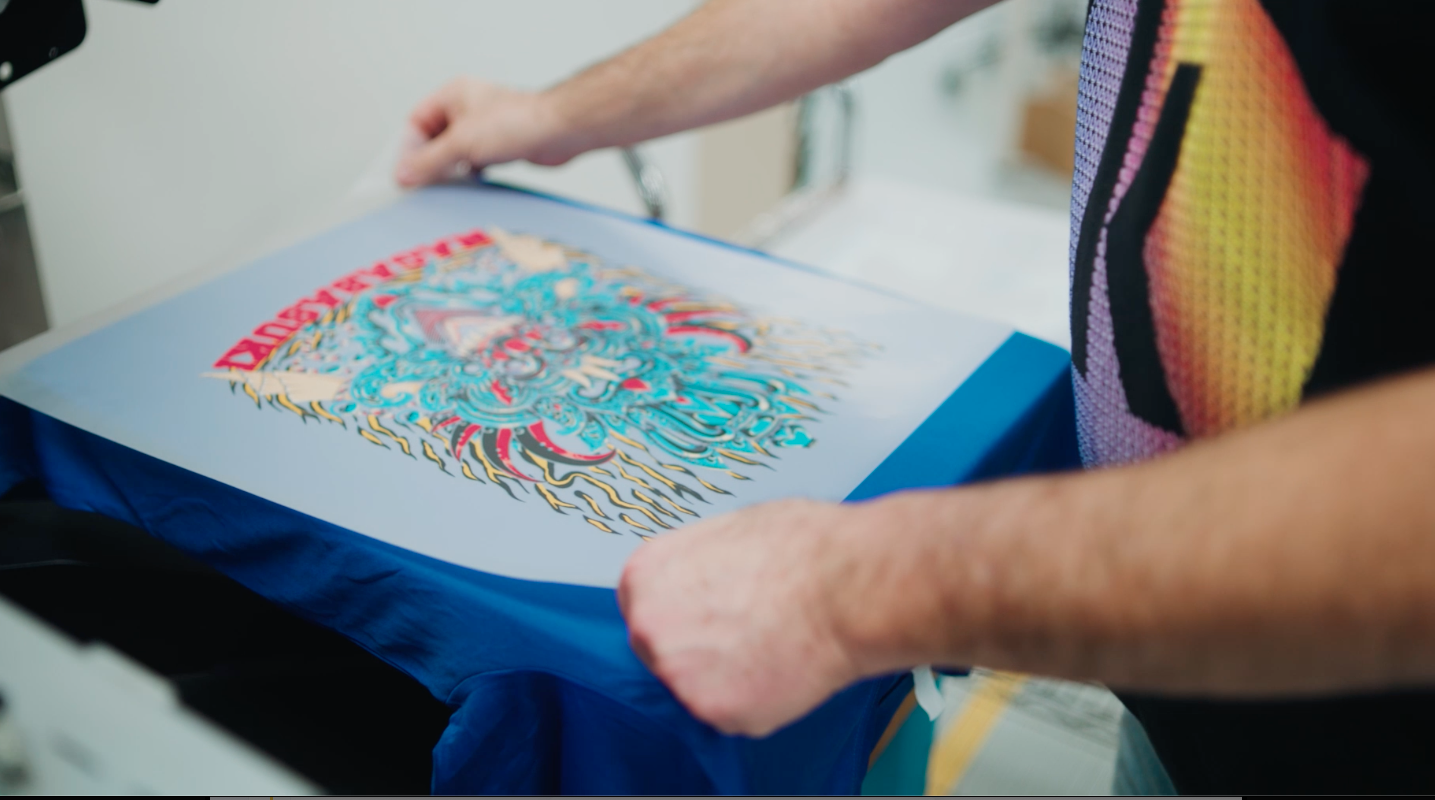
DTFilm printing involves printing a design in reverse onto a film. The stages include:
- Applying powder adhesive
- Curing the design,
- Heat-pressing it onto the fabric.
Kornit’s DTFilm technology, integrated into the Atlas MAX PLUS, further streamlines this process by allowing hybrid DTG/DTF workflows on the same machine.
Pros:
- Handles fine lines, gradients, and transparency with ease
- Works across cotton, polyester, blends, synthetics, and more
- Faster setup and low barrier to entry
- Ideal for small batches, custom orders, and multicolor designs
- Reusable and storable film designs
Cons:
- Slightly lower per-unit speed than screen printing for high-volume jobs
- Requires careful powder and curing steps for optimal results
DTF vs Screen Printing: Comparison
The main elements to consider when comparing DTF and Screen Printing are:
Print Quality and Detail
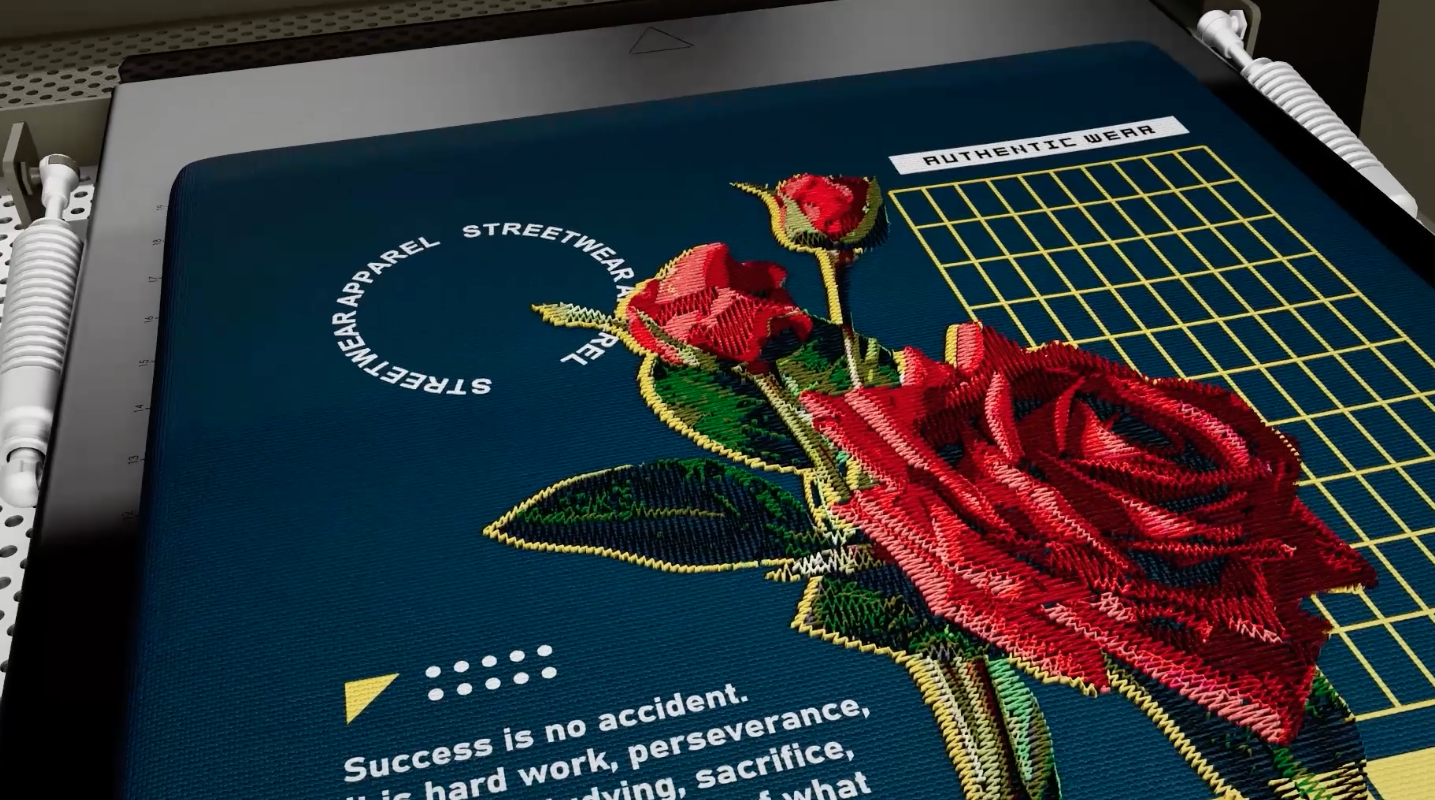
DTF provides exceptional print resolution, capturing fine lines, semi-transparency, and color gradients with precision. It offers a broader color gamut and soft hand-feel.
Screen printing, while bold in color, struggles with gradients, photographic detail, or subtle transparencies.
Verdict: DTF wins on detail, design versatility, and image sharpness.
Durability and Wash Resistance
Screen printing is known for its durability, particularly on cotton.
DTF technology matches these standards, delivering:
- 10 wash cycles at 60°C with +4 durability index
- Rub resistance equal to that of traditional DTG prints
Verdict: Both methods are highly durable.
Production Speed and Volume
Screen printing excels in long runs of simple designs, thanks to lower per-print costs once setup is complete.
Kornit MAX DTFilm achieves:
- 110–270 impressions/hour depending on layout
- Immediate print readiness (no film unrolling)
- Dual DTG/DTF support for rapid job switching
Verdict: Screen printing leads in bulk repetition; DTF wins in short-to-medium runs and personalization.
Material and Design Flexibility
DTF works across cotton, polyester, spandex, performance wear, accessories, and more. No fabric pre-treatment is required.
Screen printing is more restrictive in design and substrate range, particularly for synthetics.
Verdict: DTF offers broader substrate and design compatibility.
Cost Considerations
Screen printing involves high setup costs (screens, inks, cleaning), but low per-print costs for bulk orders.
DTF has minimal setup and excels in small runs and personalized pieces.
Verdict: Screen printing wins for high-volume cost efficiency; DTF shines in small-to-medium runs and multi-SKU agility.
Sustainability and Eco-Impact
DTFilm solutions prioritizes sustainability:
- No water waste
- Lower chemical usage
- One universal powder across all fabrics
- Reduced labor and energy requirements
In contrast, screen printing consumes water, chemicals, and energy. These are especially notable when cleaning screens and managing ink waste.
Verdict: DTF is a more eco-friendly solution.
Why Screen Printers Choose to Add DTF Technology
Screen printers increasingly adopt DTF technology to enhance their offering and stay competitive. Here’s why:
- Personalization demand: Customers expect fast-turn, customized apparel that traditional screen printing can’t deliver affordably.
- Access to new markets: DTF enables expansion into sportswear, accessories, synthetic materials, and low-run fashion drops.
- Faster production agility: Meet same-day delivery expectations without compromising quality.
- Simplified workflow: No need for screens, color separation, or post-print cleanup.
These benefits open new revenue streams without sacrificing the printer’s current screen production capabilities.
DTF vs. Screen Printing: Quick Comparison Table
| Feature | Screen Printing | DTF (with Kornit MAX DTFilm) |
|---|---|---|
| Setup Cost | High | Low |
| Print Detail | Medium | High (fine lines, gradients) |
| Material Flexibility | Limited | Wide (cotton, poly, blends) |
| Volume Efficiency | High-volume | Short-to-mid runs |
| Durability | High | High (10 wash cycles @ 60°C) |
| Color Matching | Manual calibration | Consistent, wide gamut |
| Sustainability | High water/chemical use | Eco-conscious process |
Choosing the Right Printing Method with Kornit Digital
At the end of the day, the best printing method depends on your specific needs:
- For bulk, simple designs, screen printing remains cost-effective.
- For short runs, high design complexity, and rapid turnaround, DTF works better.
Kornit Digital, a global leader in sustainable textile printing, is redefining what’s possible with DTF through its Atlas MAX PLUS system. You can now seamlessly switch between DTG and DTF workflows on a single platform.
To learn more about Kornit MAX DTFilm, please reach out to the Kornit Team at any time.