Sustainable Customization in Modern Footwear Production
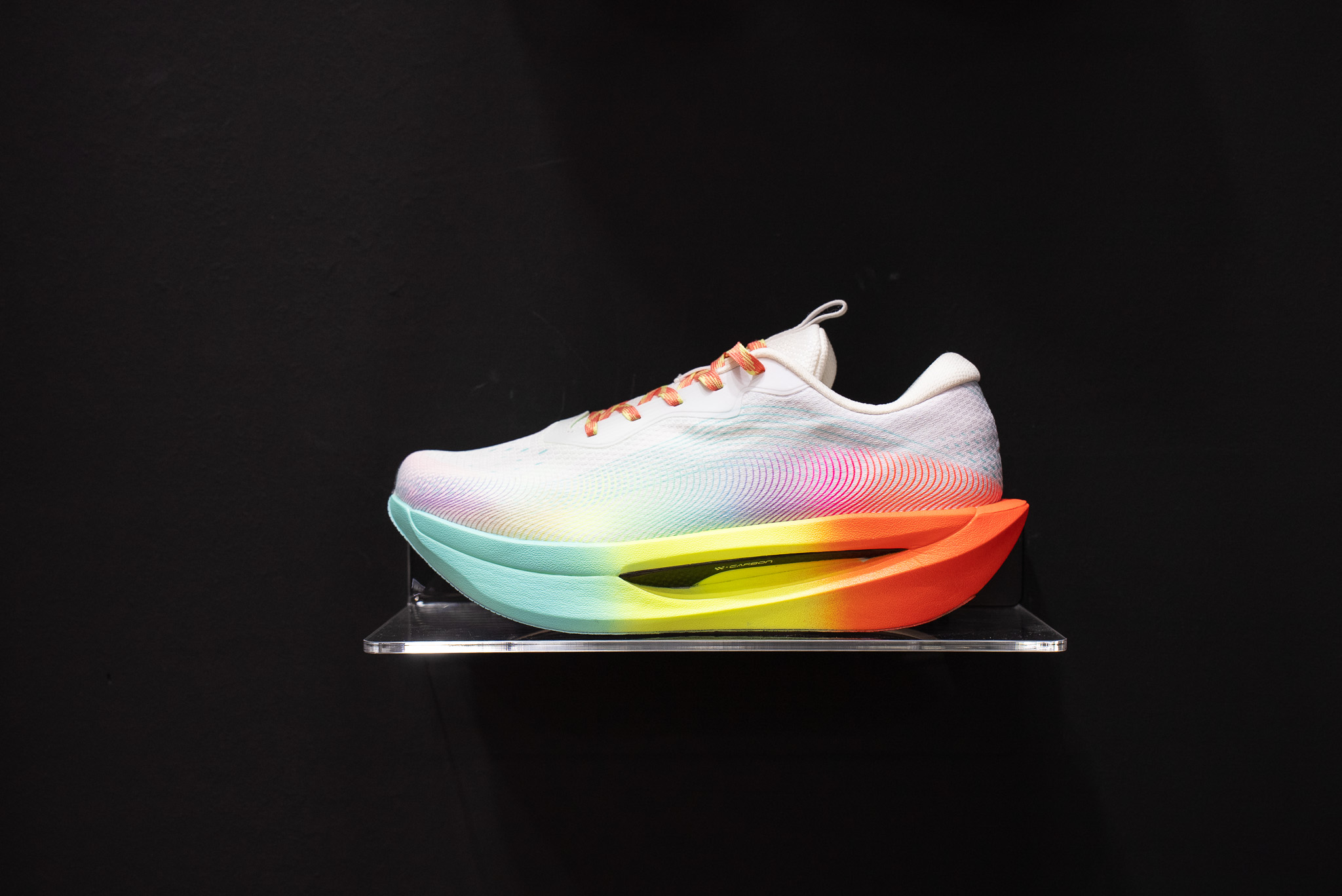
Going into 2026, footwear brands are facing two major global pressures:
- The rising demand for deep personalization
- The growing expectation of sustainability in manufacturing
Consumers want shoes that reflect their identity, lifestyle, and aesthetic preferences. Meanwhile, the industry is expected to reduce waste and eliminate harmful chemicals.
As a result, footwear manufacturing is undergoing a major transition. Production models are shifting away from mass production and toward mass customization. This includes everything from design variety to faster product cycles.
Achieving this shift sustainably requires a rethinking of both materials and methods. Modern digital production technologies make it possible to customize at scale while reducing waste and improving operational efficiency.
Why Footwear Customization Is Becoming a Global Standard
Customization has become a mainstream expectation driven by several market forces.
The explosion of athleisure and lifestyle footwear has pushed consumers to look for designs that match their personal style. Shoes are no longer just functional. They are highly expressive.
At the same time, digital culture has accelerated fashion cycles. Social media trends appear and disappear within weeks, making micro-drops, artist collaborations, and capsule collections essential tools for brand relevance. Consumers expect fast-changing options instead of “boring” seasonal releases.
Meanwhile, brands are migrating from “one big seasonal launch” to many small design moments throughout the year, encouraging a steady cadence of personalized offerings. This shift demands production systems that can adapt quickly.
The Sustainability Challenge in Traditional Footwear Production
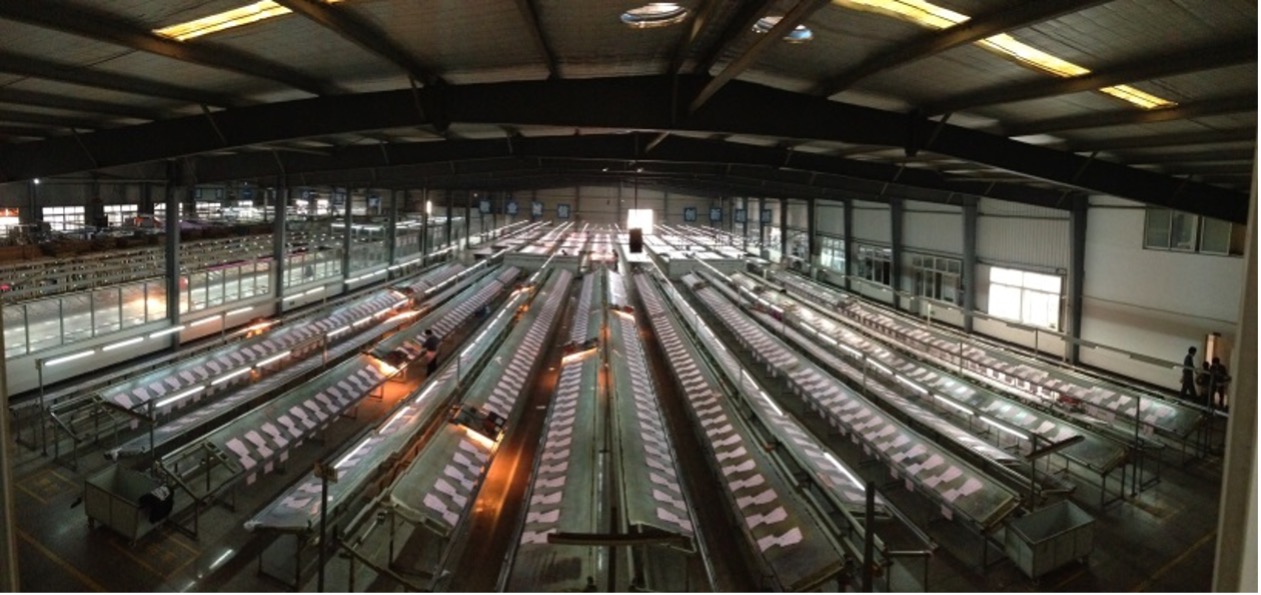
Although footwear brands want to reduce their environmental footprint, traditional decoration and manufacturing processes often work against these goals. Much of the industry still relies on analog printing methods, which are often synonymous with inefficiencies and waste.
Overproduction remains one of the highest sources of environmental impact. Brands often manufacture large quantities months in advance, hoping to predict demand. When these items don’t sell, they end up discarded.
Traditional printing methods (such as screen printing or sublimation) create a problem due to:
- Long setup times
- Chemical use and water waste
- High minimum order quantities (MOQs)
- Slower sampling and prototyping
- Transportation
These factors encourage companies to produce large batch sizes to justify setup and labor. But large batches also create large inventories. So when trends shift rapidly, those inventories turn into waste.
What Makes Sustainable Customization Hard to Achieve?
Customizing footwear sustainably is far more complex than simply introducing new designs. Footwear uppers are made from technical substrates such as TPU, PU, leather, knits, mesh, and coated synthetics. Many of these are challenging to decorate.
Any printed surface on a shoe must survive:
- Constant bending and flexing
- Abrasion from movement and impact
- Heat exposure
- Environmental wear
Achieving this durability with eco-friendly, waterless, or non-toxic processes is a significant engineering challenge. On top of that, customization traditionally increases waste because more variation leads to the risk of overproduction.
In other words, sustainable customization is much more than a design challenge. It’s a technology challenge.
Brands need systems that support high durability, wide material compatibility, and eco-friendly workflows without inflating costs.
How Modern Technologies Make Sustainable Footwear Customization Possible
Digital workflows and automation allow brands to deliver mass personalization with far smaller environmental footprints.
Digital, Waterless Printing on Technical Fabrics
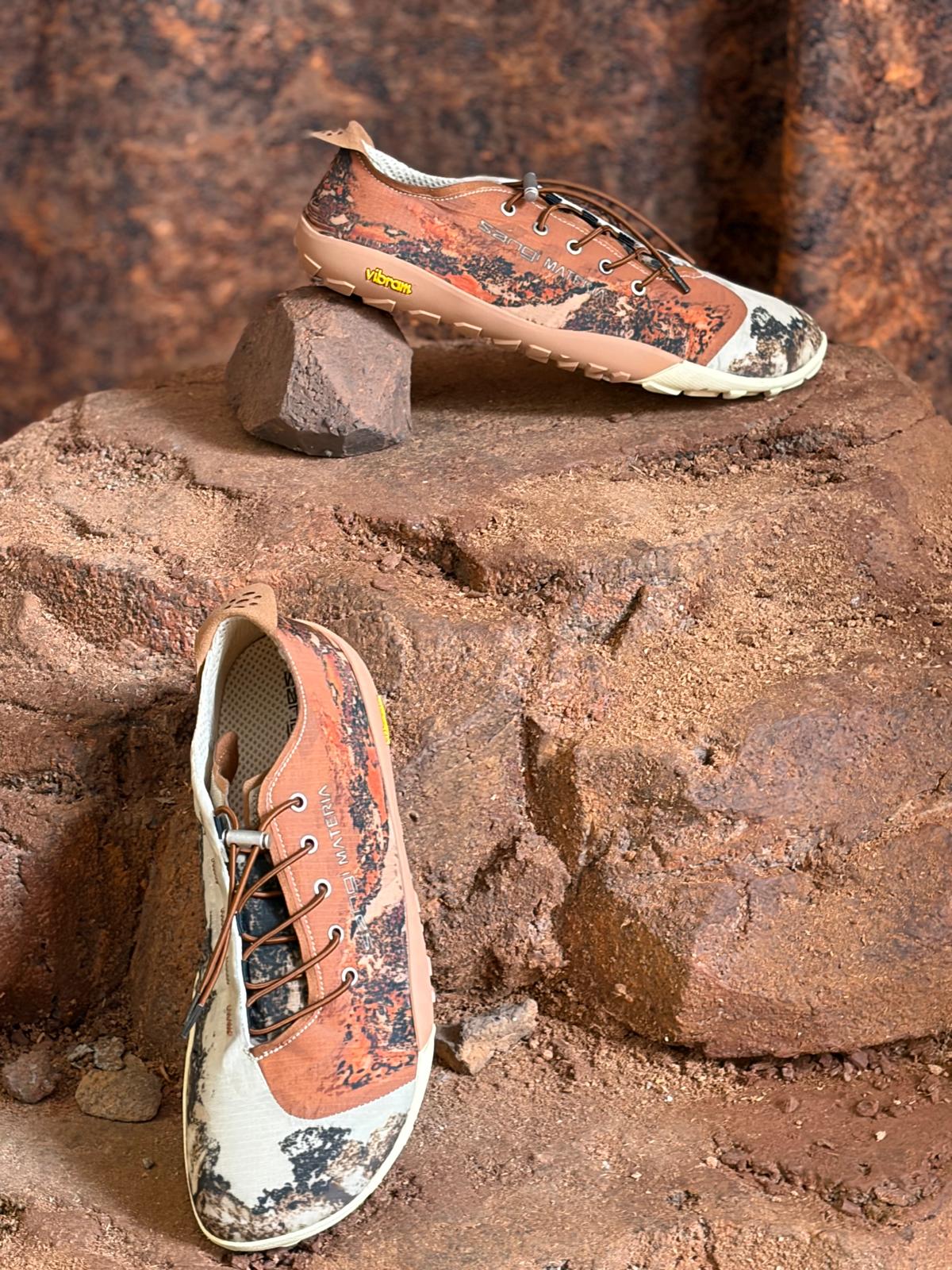
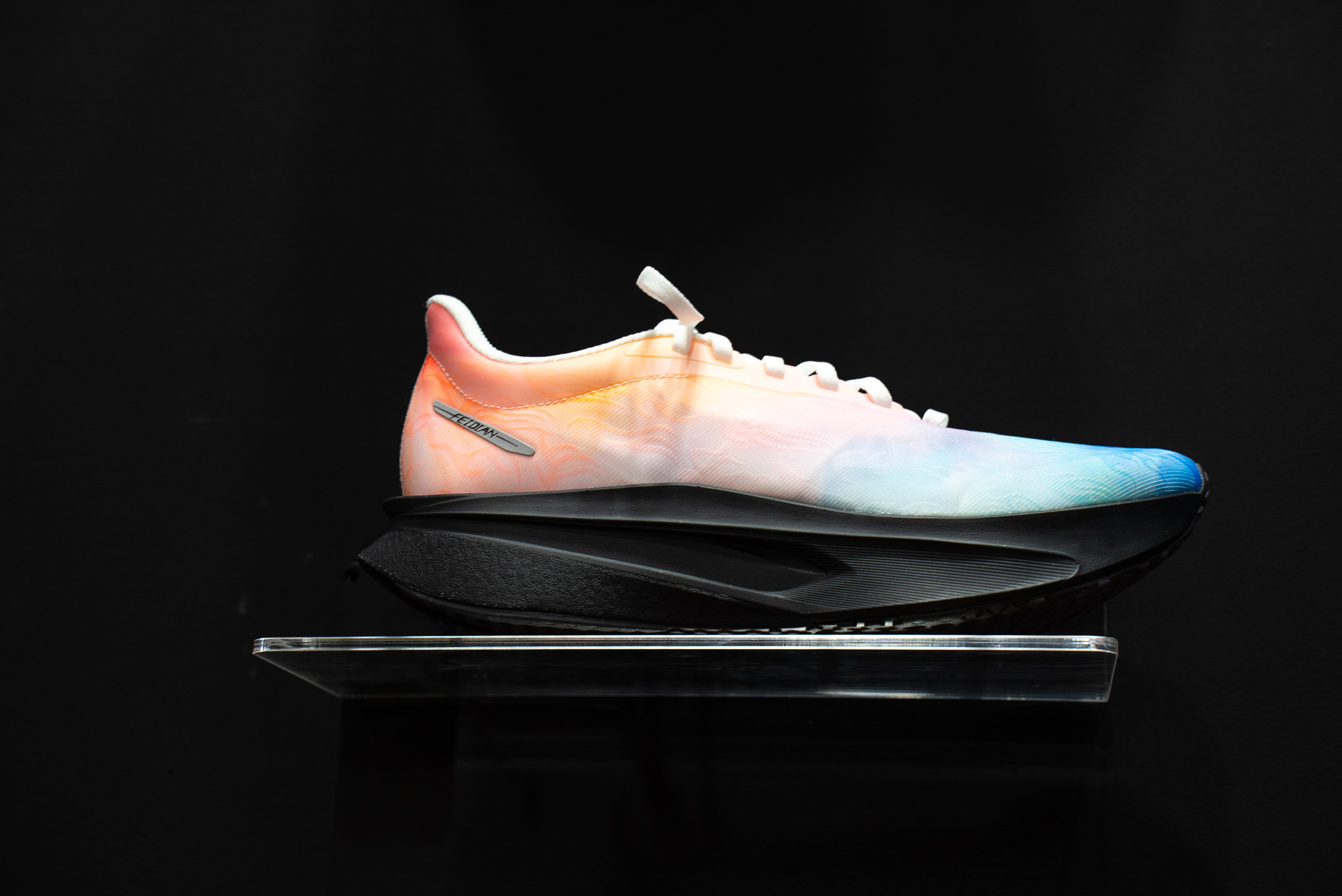
Modern digital printing systems can decorate uppers directly (before assembly) using waterless chemistry and highly controlled adhesion systems.
This reduces water waste and chemical usage while supporting durability on complex substrates like TPU or vegan leather. Because digital workflows do not require screens or physical plates, shorter runs and micro-collections become economically feasible.
On-Demand Production & Local Manufacturing
The shift toward on-demand manufacturing is transforming sustainability economics. Producing only what consumers order dramatically reduces inventory waste.
When paired with near-shore or in-region facilities, brands cut shipping distances, lower emissions, and respond faster to fast-moving trends. Localized printing hubs make it possible to match production volumes directly with real demand.
Sustainable Materials & Inks
Advances in polymer-based adhesion layers, pigment-based inks, and recyclable or vegan materials are expanding the range of print-compatible substrates. Flexible synthetics, recycled yarns, TPU films, and coated meshes can now be decorated without harsh chemicals.
Non-toxic pigment inks reduce environmental impact while maintaining durability for sports and lifestyle products.
Automation & Digital Workflows
Digitally driven production minimizes human error and material waste. Automated RIP processes, calibrated color management, and digital sampling allow designers to finalize concepts without creating physical samples. Faster prototyping reduces energy consumption and cuts the carbon footprint.
Modern vs. Traditional Footwear Decoration Methods
Digital production fundamentally changes the environmental and operational profile of footwear decoration. Here is how:
Environmental Impact
Advanced digital printing uses waterless, low-energy processes with minimal consumables. Screen printing and heat-transfer workflows involve multiple steps, washing cycles, chemicals, and significant material waste.
Flexibility & Design Variety
Digital technology allows brands to print any graphic, any color, and any variation instantly. Analog methods depend on physical screens or plates, making new designs time-consuming and resource-heavy.
Production Speed & Scalability
Digital workflows transition instantly between designs, enabling micro-drops, unlimited SKUs, and rapid trend response. Traditional methods require lengthy setup and enforce high MOQs.
Material Compatibility
Modern digital systems can decorate TPU, PU, leather, mesh, knits, and coated synthetics. Traditional processes struggle with flexible, coated, or heat-sensitive materials
The Role of Digital Printing in the Future of Sustainable Footwear
As brands accelerate their transformation, digital printing is becoming the centerpiece of sustainable footwear production. It removes analog waste, empowers limitless creativity, and supports industrial-level throughput. Thanks to this, designers can explore new textures and colorways.
Most importantly, digital workflows align with sustainability goals: they reduce waste and water usage and enable on-demand production while still meeting the rigorous footwear standards.
How Kornit Digital Fits Into This Future
Kornit Digital is one example of a technology provider helping footwear brands reach this next stage. Kornit’s systems use waterless, single-step digital printing workflows designed to decorate technical footwear materials with deep color and durability.

In October 2025, at ITMA Asia + CITME Singapore, Kornit Digital unveiled a fully digital, high-performance workflow for athletic and technical footwear. The new advanced technology supports substrates like TPU, PU, vegan leather, mesh, and knitted uppers, all while meeting key abrasion and flex standards.
Kornit uses a single-step digital process and advanced consumables to deliver sustainable and durable prints. It works for everything from running shoes to fashion sneakers. This technology helps brands move from mass production to fast, flexible, on-demand creation.
Are you interested in exploring what digital, sustainable customization could look like for your footwear line? Let’s talk!